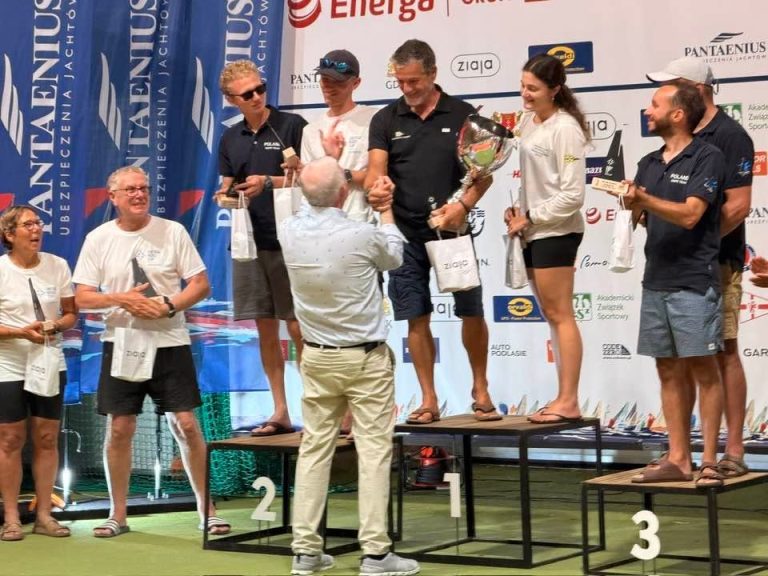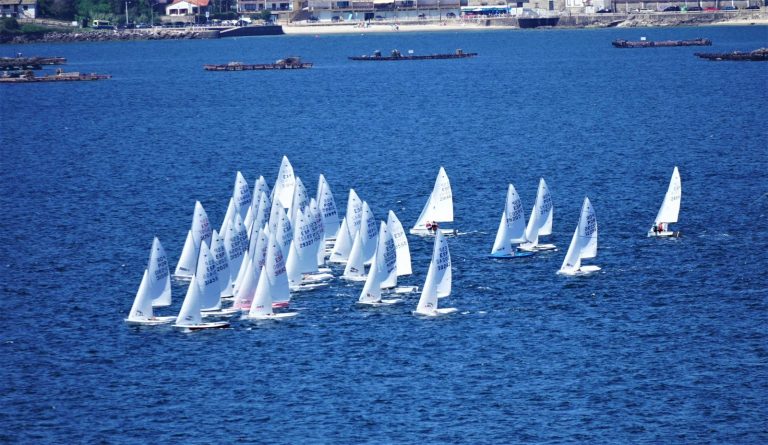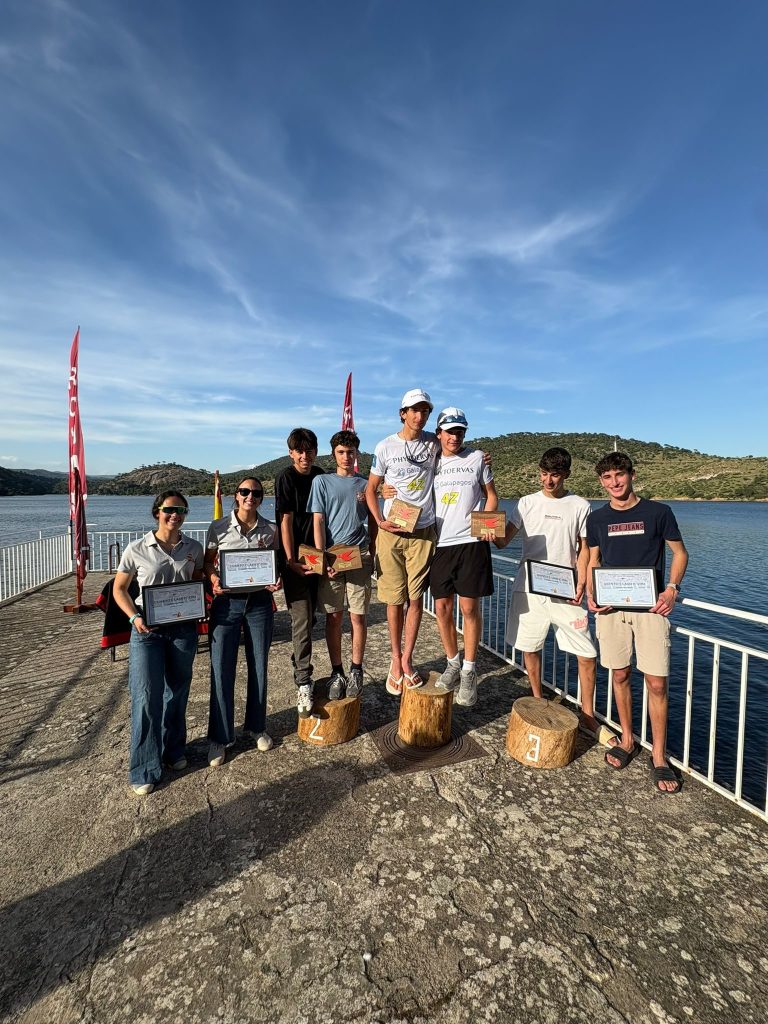
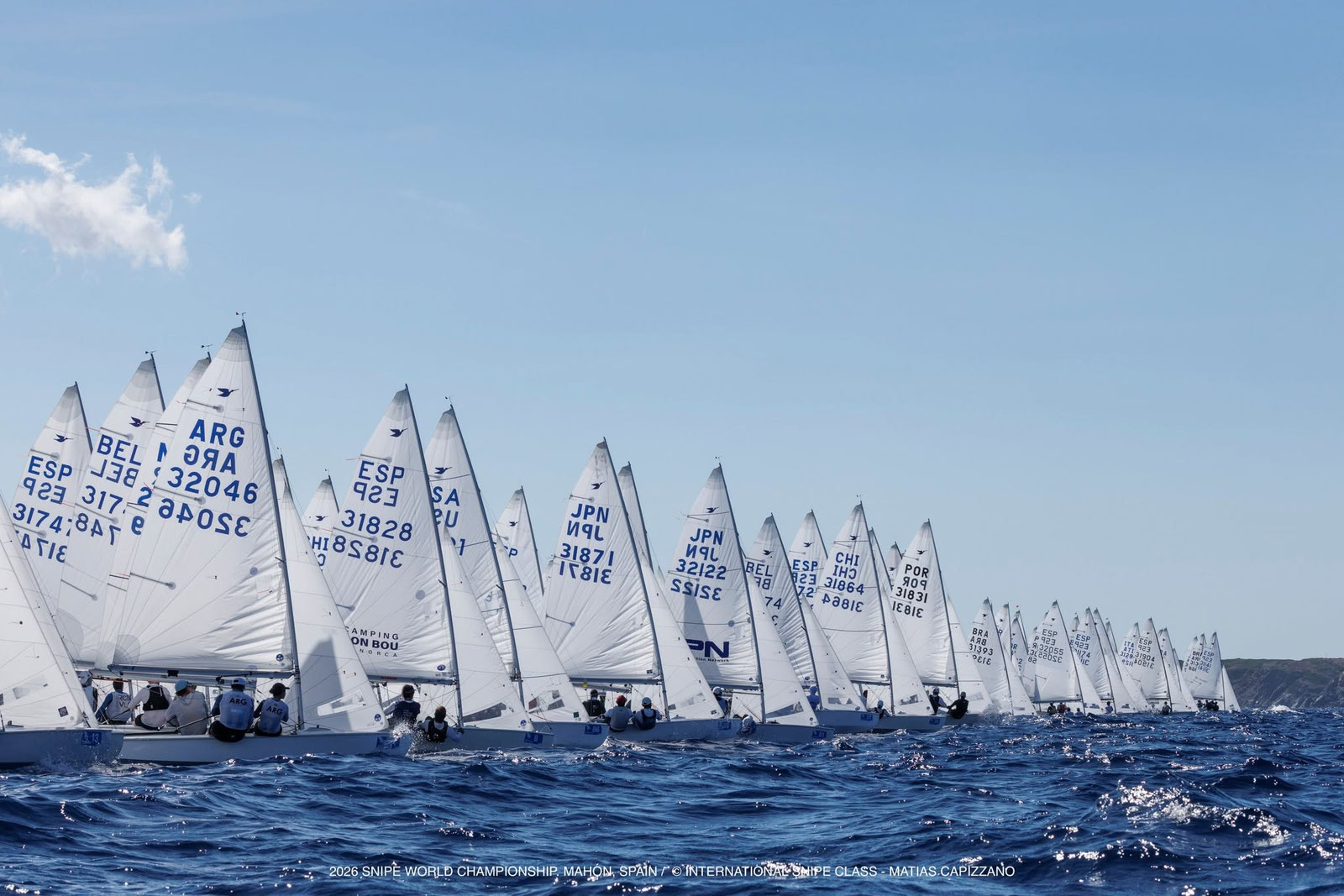
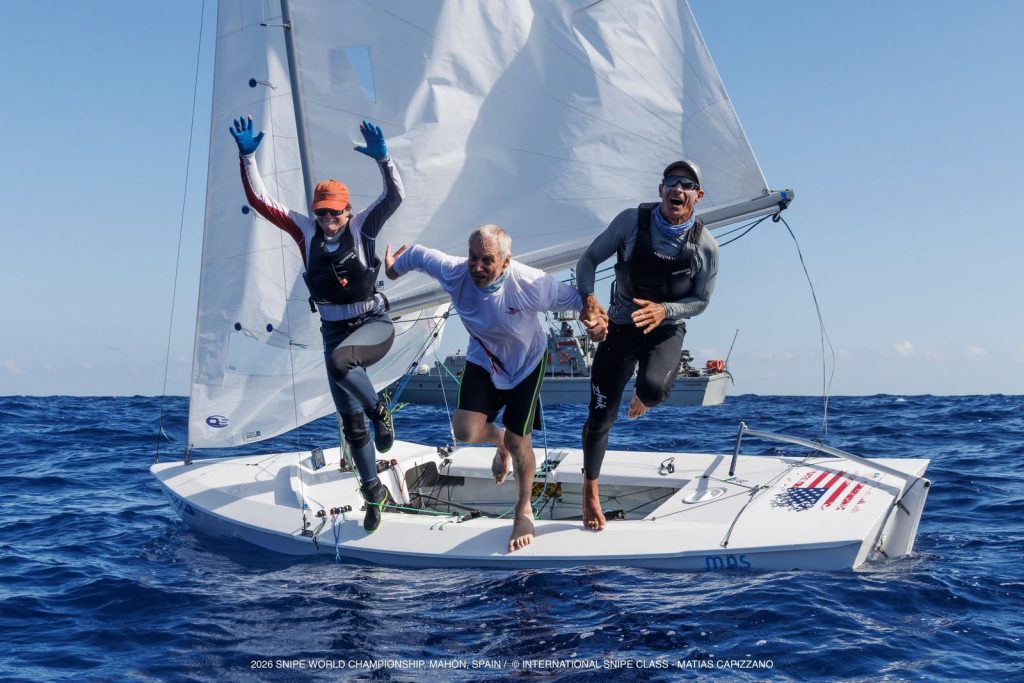
El Campeonato del Mundo de Snipe de Mahón 2026 ya es historia. Nueve mangas, 88 barcos de 21 países y seis días de competición han terminado coronando a Ernesto Rodriguez y Taylor Scheuermann como nuevos campeones del mundo. La tripulación estadounidense se lleva el Commodore Hub E. Isaacks Trophy después de imponerse con 32 puntos a los argentinos Julio Alsogaray y Malena Sciarra, segundos con 36, y Alfredo González y Cristian Sánchez, terceros.
Desde Snipe Spain queremos comenzar felicitando a los nuevos campeones por un título conseguido en un Mundial tremendamente competido y con condiciones muy diferentes a lo largo de la semana.
Cinco españoles en el Top 10 y un bronce
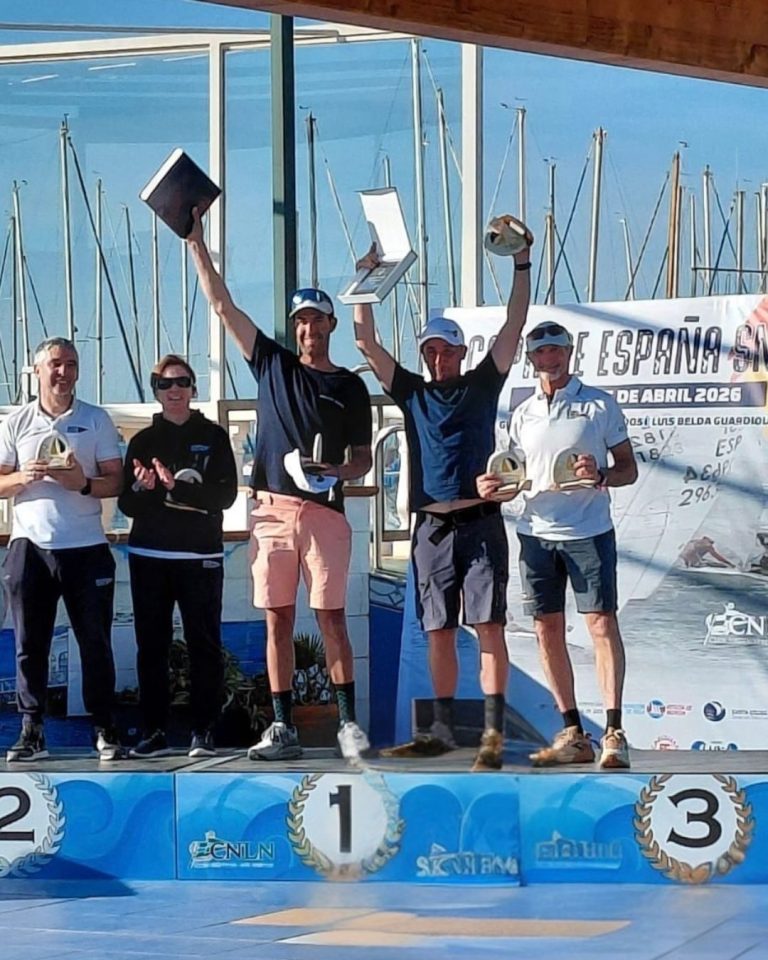
El balance para la flota española ha sido muy positivo. Alfredo y Cristian vuelven a subir a un podio mundial cuatro años después de proclamarse campeones en Cascáis. Terminaron terceros y fueron además una de las pocas tripulaciones capaces de ganar más de una prueba, con victorias en la segunda y en la novena y última manga. Su serie final fue 2-1-(31)-12-9-7-3-28-1.
El protagonismo español se mantuvo prácticamente desde el primer día. Alfredo y Cristian fueron los primeros líderes del campeonato, con cuatro barcos españoles entre los cinco primeros después de las dos primeras pruebas. Tras la tercera manga, Gustavo y Rafael del Castillo, que además cierran en este mundial su etapa como tripulación, pasaron a encabezar el Mundial y España llegó a colocar seis tripulaciones dentro del Top 10.
Pero uno de los datos más significativos del campeonato ha sido la profundidad del equipo español. Cinco tripulaciones terminaron entre las diez primeras: José M. Guerrero y Nahuel Rodríguez fueron sextos; Gustavo y Rafael del Castillo, octavos; Raúl de Valenzuela y Antolín Alejandre, novenos; y Francisco y Marina Sánchez Ferrer, décimos. Yuyu y Nahuel sumaron además la tercera victoria parcial española al imponerse en la octava manga.
El resultado final, un podio, cinco barcos entre los diez primeros y tres victorias de manga, refleja el nivel de la flota española en un campeonato que reunió a buena parte de los grandes nombres internacionales de la clase.
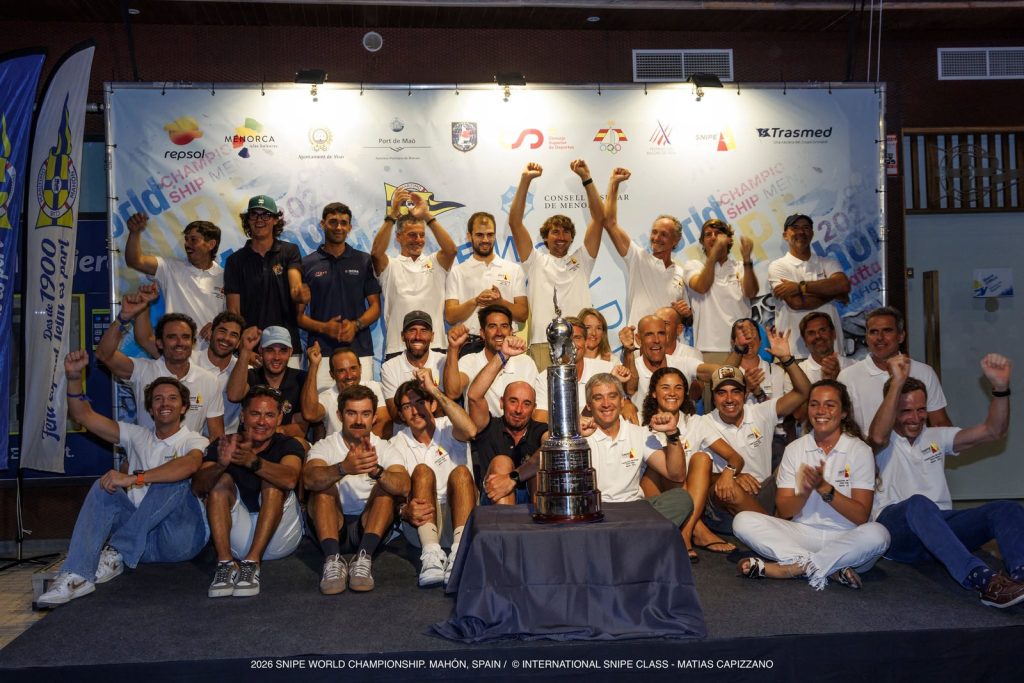
Mahón marca el camino para futuros eventos
Si algo ha quedado claro durante estos días es que el éxito del Mundial no se ha limitado al agua.
El Club Marítimo de Mahón ha realizado un trabajo extraordinario. Organización en tierra y en el agua, voluntarios, programa social, integración del campeonato en la ciudad y capacidad para gestionar una semana meteorológicamente complicada han hecho que la valoración de los participantes haya sido prácticamente unánime.
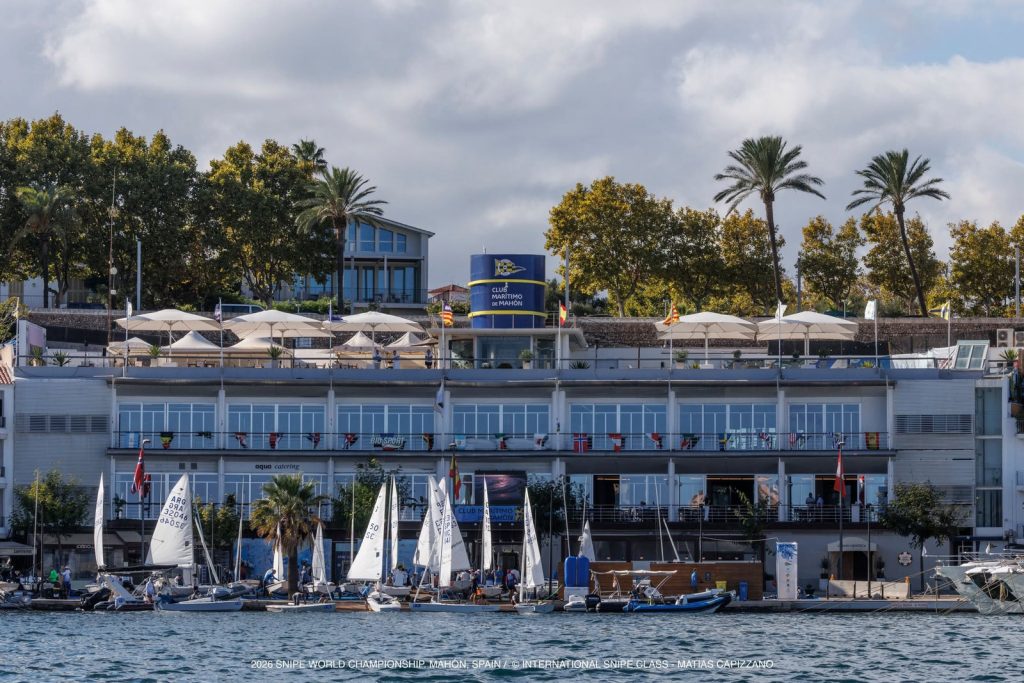
No es solo una impresión desde fuera. El propio comodoro de SCIRA, Martín Bermúdez de la Puente, destacaba durante el campeonato que Mahón estaba superando las expectativas de la clase y señalaba el altísimo nivel de la organización y la satisfacción de los 88 equipos participantes.
También había detrás muchos años de trabajo. Para Damián Borrás, uno de los principales impulsores del proyecto, conseguir llevar el Mundial a Menorca era la culminación de un objetivo perseguido durante décadas. Durante el campeonato hablaba de un sueño hecho realidad y destacaba especialmente el ambiente generado alrededor del club y la implicación de Mahón con la regata.
Organizar un Mundial no consiste únicamente en montar un buen campo de regatas. Consiste en conseguir que durante una semana los participantes sientan que están en un acontecimiento especial. En eso Mahón ha acertado plenamente.
Los próximos clubes que aspiren a organizar un gran campeonato de la clase ya tienen una referencia muy cercana. Mahón ha puesto el listón muy alto.
Y también un Mundial que se ha contado
Hay otro aspecto de Mahón 2026 que merece una reflexión aparte: la comunicación.
Probablemente nunca un Campeonato del Mundo de Snipe había tenido una cobertura tan completa y continua. Fotografía y video profesional diaria, entrevistas, noticias, contenidos en redes sociales, información prácticamente en tiempo real y publicaciones constantes desde los canales del Club. Además, seguimiento GPS de toda la flota mediante Vakaros RaceSense.
El resultado ha sido un campeonato que se podía seguir desde cualquier lugar. No solo consultar una clasificación al terminar el día, sino ver, entender y compartir lo que estaba ocurriendo en Mahón.
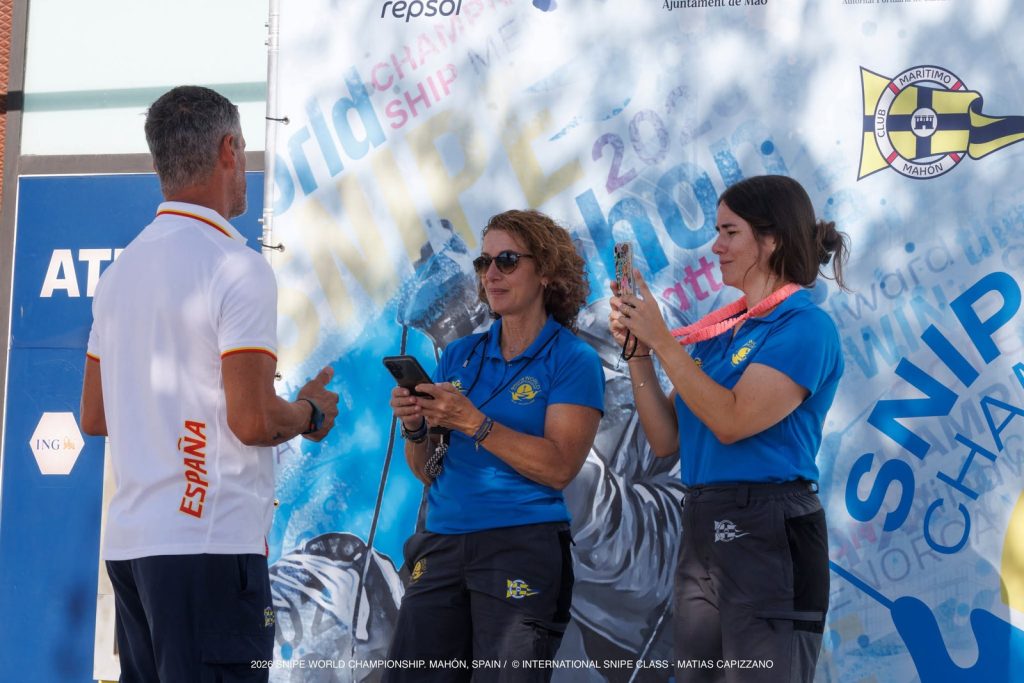
Y esto importa.
Nuestra clase tiene más de noventa años de historia, una flota internacional extraordinaria y un nivel deportivo difícil de encontrar en otras clases. Pero nada de eso garantiza por sí solo que resulte atractiva para nuevas generaciones de regatistas. Si queremos hacer crecer la clase, necesitamos también saber contarla.
Buenas fotografías, vídeo, tracking, resultados accesibles, redes sociales activas y una narrativa alrededor de los regatistas no son elementos accesorios de un gran campeonato. Forman parte del campeonato.
SCIRA establece ya un proceso formal para que los clubes presenten sus candidaturas a organizar los grandes campeonatos internacionales. Quizá después de Mahón haya llegado el momento de dar un paso más: que los futuros bids incluyan también un plan mínimo de comunicación y cobertura del evento como uno de los requisitos de la candidatura.
No se trata de exigir grandes presupuestos ni producciones imposibles. Se trata de asegurar unos estándares: fotografía de calidad, información diaria, resultados fácilmente accesibles, seguimiento en redes y capacidad para contar las historias que ocurren dentro y fuera del agua.
Mahón ha demostrado lo que ocurre cuando organización, competición y comunicación trabajan juntas. El resultado no es solamente un gran Mundial para quienes han tenido la suerte de estar allí. Es un Mundial que mucha más gente ha podido vivir desde fuera. Y esa es probablemente una de las mejores herramientas que tenemos para hacer crecer la clase.
English version
Mahón 2026: A World Championship That Sets the Bar High
The 2026 Snipe World Championship in Mahón is now history. Nine races, 88 boats from 21 countries and six days of competition ended with Ernesto Rodriguez and Taylor Scheuermann crowned as the new World Champions. The American team takes home the Commodore Hub E. Isaacks Trophy after finishing on 32 points, ahead of Argentina’s Julio Alsogaray and Malena Sciarra in second on 36, and Alfredo González and Cristian Sánchez in third. At Snipe Spain, we would first like to congratulate the new champions on a title won in a fiercely competitive World Championship, with a wide range of conditions throughout the week.
Five Spanish teams in the Top 10 and a bronze medal
The Spanish fleet leaves Mahón with a very positive overall result. Alfredo and Cristian are back on a World Championship podium four years after becoming World Champions in Cascais. They finished third and were also one of the few teams to win more than one race, taking victories in Race 2 and in the ninth and final race. Their final scoreline was 2-1-(31)-12-9-7-3-28-1.
The Spanish fleet was in contention almost from the very first day. Alfredo and Cristian were the early leaders, with four Spanish boats among the top five after the opening two races. After Race 3, Gustavo and Rafael del Castillo — who brought their time racing together as a team to a close at this World Championship — moved into the overall lead, with Spain placing six teams inside the Top 10.
But one of the most significant aspects of the championship was the depth of the Spanish fleet. Five teams finished inside the top ten: José M. Guerrero and Nahuel Rodríguez were sixth; Gustavo and Rafael del Castillo, eighth; Raúl de Valenzuela and Antolín Alejandre, ninth; and Francisco and Marina Sánchez Ferrer, tenth. Yuyu and Nahuel also secured Spain’s third race win of the championship with victory in Race 8.
The final result — one podium finish, five boats in the Top 10 and three race wins — reflects the strength of the Spanish fleet in a championship that brought together many of the leading names in the international Snipe class.
Mahón sets the standard for future events
If one thing has become clear over the past few days, it is that the success of this World Championship was not limited to what happened on the water.
Club Marítimo de Mahón did an outstanding job. The organisation ashore and on the water, the volunteers, the social programme, the way the championship became part of life in the town, and the ability to manage a week of challenging weather conditions all contributed to an overwhelmingly positive response from the competitors.
And this is not simply an impression from the outside. During the championship, SCIRA Commodore Martín Bermúdez de la Puente said that Mahón was exceeding the class’s expectations, highlighting the high standard of the organisation and the positive response from the 88 competing teams.
There were also many years of work behind the event. For Damián Borrás, one of the main driving forces behind the project, bringing the World Championship to Menorca was the culmination of an ambition pursued for decades. During the championship, he described it as a dream come true and particularly highlighted the atmosphere around the club and the way Mahón had embraced the event.
Organising a World Championship is not simply about setting a good racecourse. It is about making competitors feel, for an entire week, that they are part of something special. Mahón achieved exactly that.
Future clubs hoping to host one of the class’s major championships now have a clear benchmark. Mahón has set the bar very high.
A World Championship that reached beyond Mahón
There is another aspect of Mahón 2026 that deserves a separate reflection: communication.
Probably no Snipe World Championship has ever received such comprehensive and continuous coverage. Daily professional photography and video, interviews, news, social media content, almost real-time updates and a constant flow of content through the Club’s channels. On top of that, the entire fleet could be followed via GPS using Vakaros RaceSense.
The result was a championship that could be followed from anywhere. It was not just about checking the results at the end of the day, but being able to see, understand and share what was happening in Mahón.
And that matters.
Our class has more than ninety years of history, an extraordinary international fleet and a level of competition that is difficult to find in other classes. But none of that alone guarantees that it will remain attractive to new generations of sailors. If we want the class to grow, we also need to know how to tell its story.
Good photography, video, tracking, accessible results, active social media and storytelling built around the sailors are not optional extras at a major championship. They are part of the championship.
SCIRA already has a formal process for clubs to submit bids to host major international championships. Perhaps after Mahón it is time to take another step: future bids should also include a minimum communications and event coverage plan as one of the requirements. This is not about demanding huge budgets or unrealistic productions. It is about ensuring certain standards: quality photography, daily updates, easily accessible results, active social media coverage and the ability to tell the stories unfolding both on and off the water.
Mahón has shown what happens when organisation, competition and communication work together. The result is not only a great World Championship for those fortunate enough to have been there. It is a World Championship that many more people were able to experience from afar. And that is probably one of the best tools we have to help our class grow.